Bedding · Materials & Care
Wool Mattress Layers: How Loft, Quilting, and Care Shape Sleep Comfort
Wool can make a mattress feel softer without turning it into a different bed. Its capacity to absorb moisture and release heat gives it a distinctive role in sleep comfort, but the result depends on more than the fiber itself. Fill, quilting, thickness, and care all help determine whether a wool layer feels like a quiet refinement or a conspicuous pillow-top.
A mattress has a way of making its preferences known. It may be too firm at the shoulder, too warm by midnight, or simply not quite as inviting as it once was. A topper offers a modest intervention: a layer placed above the mattress, beneath the sheet, that can alter the surface feel without replacing the mattress beneath it. Among the available materials, wool is notable less for dramatic softness than for the way it manages the small negotiations between body, bed, and room.
Wool fibers can take up moisture vapor and release heat, helping create a sleep surface that feels less clammy and less prone to abrupt temperature changes. That does not mean a wool topper acts like air-conditioning, or that it guarantees a cooler night. Room temperature, bedding, mattress construction, sleepwear, and individual physiology all matter. But wool’s combination of loft, resilience, and moisture handling can make it a useful material for people seeking gentle cushioning and a more balanced feel.
There is, however, no single wool-topper experience. A thin quilted layer may offer only a slight easing of firmness. A deeper, generously filled design may create a more pronounced plushness. Two products labeled “wool” can differ substantially in fill weight, batting structure, cover fabric, and stitching. To compare them sensibly, it helps to look beneath the name and consider how the layers are built.
What wool contributes to a sleep surface
Wool is a natural fiber with a useful capacity to absorb and release moisture. During sleep, the body gives off heat and water vapor; the bed’s materials determine how that warmth and moisture are managed. Wool can absorb a portion of the vapor without immediately feeling wet, then release it as conditions change. This characteristic is one reason wool appears in bedding intended for use across seasons.
Its role is not simply to add warmth. A wool layer can provide insulation, but the way it handles moisture may help keep the surface feeling more even. The sensation is often described as comfortable or temperate rather than distinctly cool. Those words are subjective, and a topper cannot overcome every source of heat retention. If a mattress is already too warm because of its core materials, or if the bedroom is hot and poorly ventilated, wool may not resolve the problem on its own.
Wool also has natural spring. Its fibers bend under pressure and can lend a surface a soft, yielding quality. Still, a wool topper should not be mistaken for a structural mattress repair. It may cushion pressure points and soften a firm surface, but it cannot correct a sagging mattress, restore failing support, or reliably change the underlying alignment characteristics of a worn bed. A topper is best understood as a comfort layer, not a remedy for a damaged foundation.
Loft: how thickness changes the feel
Loft describes the height or fullness of a layer. In a wool mattress topper, loft is shaped by the amount and arrangement of fill, the way that fill is held in place, and how the material settles with use. A topper’s stated thickness is useful, but it does not tell the whole story: a lofty, loosely arranged fill can feel different from a denser layer of the same height.
At the thinner end, a wool topper may provide a subtle buffer between the sleeper and mattress. It can smooth the surface and add a small measure of softness while leaving the bed’s basic character largely intact. This can suit someone who likes the mattress overall but wants a touch more give at the shoulders or hips. A thinner layer can also be a sensible starting point when the sleeper is uncertain about how much cushioning they want.
A thicker topper generally makes a more noticeable change. More loft can create a plush, pillow-top impression, and it may offer a deeper cushion for side sleepers whose shoulders and hips press into a firm surface. But extra height is not automatically extra comfort. If a layer is too soft or too deep for a particular sleeper, the body may settle more than preferred. The result can feel less supportive, especially for people who prefer a flatter, firmer surface.
Sleep position provides a useful, though not absolute, reference. Side sleepers often seek additional cushioning around prominent joints. Back sleepers may prefer a gentler change that does not make the pelvis sink excessively. Stomach sleepers commonly value a comparatively firm, even surface. Body weight, mattress firmness, and personal preference alter all of these generalizations; no thickness can be prescribed from sleep position alone.
When comparing options, consider the topper as part of the whole bed. A three-inch layer added to a soft mattress will not feel like the same layer placed on a firm one. The mattress’s condition matters too: a topper may soften a sound but unyielding surface, while it will not bridge a deep depression or make uneven support disappear. If possible, use the maker’s stated measurements and construction details as a guide, then think about the particular sensation you hope to change.
Quilting: keeping the filling in place
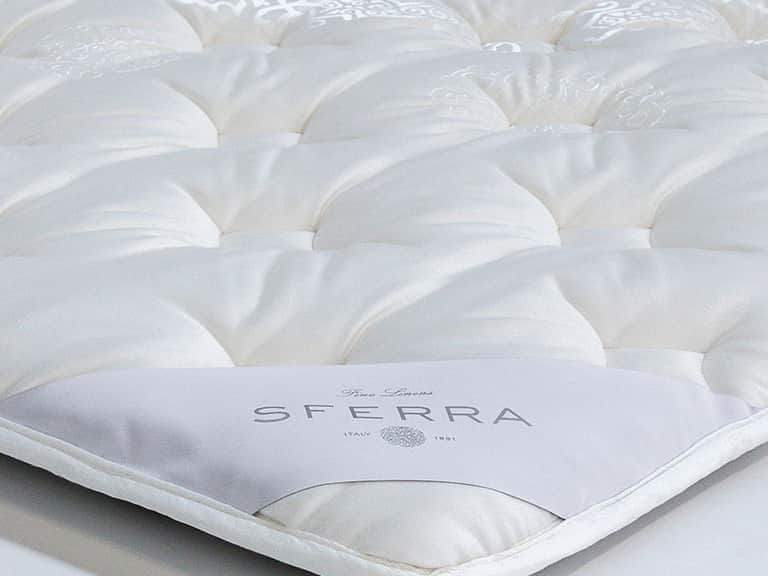
Quilting joins the cover and filling through a pattern of stitched sections. In a wool mattress topper, this construction helps limit shifting and bunching, keeping the fill more evenly distributed across the bed. The stitch pattern, spacing, and depth of the compartments influence how the surface behaves, though they do not by themselves determine softness or support.
Closely controlled quilting can help a topper hold its shape, while larger stitched areas may allow more freedom in the fill. Over time, pressure and movement can compress wool, and some settling is part of the material’s ordinary life. A well-considered quilted design is intended to make that settling more uniform, not to prevent all change forever.
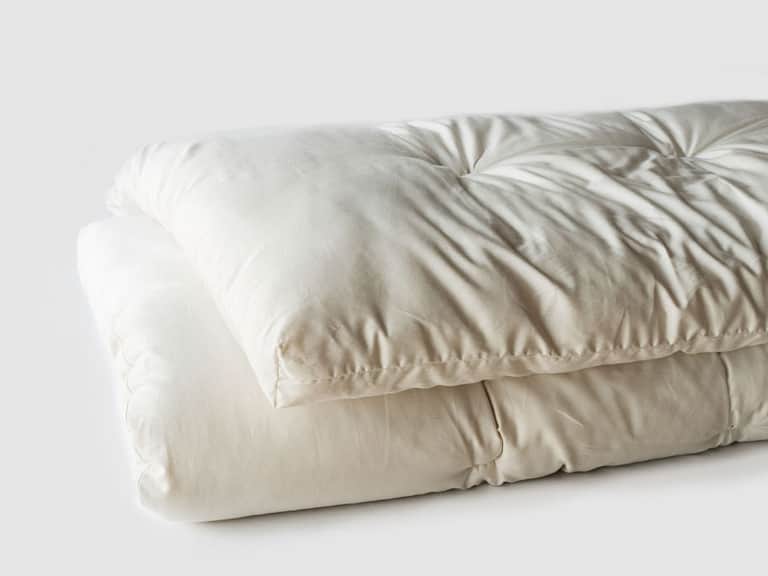
Quilted wool toppers commonly pair wool batting with a cotton cover. Cotton can provide a breathable outer layer, while the stitching secures the batting beneath it. The particulars vary. Some products use organic cotton fabric and certified organic wool; others use different fibers or blends. It is worth distinguishing a claim about one component from a claim about the entire product, and checking what a stated certification actually covers.
For example, the Certified Organic Quilted Topper combines GOTS-certified organic cotton fabric with GOTS-certified wool fill in a quilted construction. It is offered in two thickness options, described as a gentler layer and a more substantial, pillow-top-like one. Its care guidance calls for spot cleaning rather than machine washing, with periodic airing or sunning to refresh the wool. Those details illustrate a broader point: construction and maintenance belong in the same comparison. The comfort layer you choose is also a layer you will need to look after.
Cover fabric and the feel at the surface
The cover is the part of the topper most directly encountered by sheets and skin, and it has a quiet influence on the bed’s feel. Cotton is common because it is breathable and familiar, but cotton fabrics can differ in weave, weight, and finish. A smooth, tightly woven cover may feel unlike a softer or more textured one. The cover also helps contain the fill and contributes to the topper’s durability.
When a topper has a substantial quilted cover, its surface may feel more structured than a thin, stretchy casing around a foam layer. That distinction is not a measure of quality; it is a difference in construction. Shoppers who want the mattress beneath to remain perceptible may favor a lower-profile layer. Those hoping for a fuller, more cushioned bed may welcome a more substantial quilted surface.
Labels such as “natural,” “organic,” or “hypoallergenic” should be read with care. A product description may refer to a particular filling, the cover, or the complete assembly. Certifications can help establish standards for specified materials and processing, but they do not settle every practical question: whether the feel suits you, how easy the topper is to maintain, or how it will perform in your home. Material claims are most useful when they are specific.
Finding a wool topper for your preferences
A good comparison begins not with an abstract idea of the “best” topper, but with the short list of things that are not working. Is the mattress too firm at the hips? Does the surface feel unevenly warm? Are you looking for a small adjustment or a plush transformation? Clear answers narrow the field more effectively than a broad search for luxury or natural materials.
- Identify the change you want. A topper can add cushioning, but it is less suited to fixing a sagging or unsupportive mattress.
- Compare fill and thickness. Look for details about wool type, fill amount where available, stated loft, and whether the layer is designed to feel gently soft or notably plush.
- Study the construction. Quilting, tufting, or another method of securing the fill can affect how evenly the topper wears.
- Check the cover. Note its fiber content and weave, and consider how it will feel under your usual sheets.
- Read care instructions before deciding. Wool toppers often require spot cleaning rather than routine machine washing.
- Measure the bed. Confirm the mattress dimensions and consider whether extra height will affect fitted-sheet depth or the feel of the bed’s edge.
For someone who wants an incremental change, a lower-profile or more lightly filled design may be easier to live with than a deep pillow-top. For someone seeking a distinctly cushioned surface, a higher-loft option may be more appealing. If you share a bed, remember that the topper affects the surface for both sleepers. One person’s welcome softness may be another’s loss of firmness; in that situation, the existing mattress, sleeping positions, and differences in temperature preference all deserve consideration.
Care: preserving loft without damaging the fill
Wool bedding rewards restrained care. Many wool mattress toppers are not machine washable, and forcing one into a washer or dryer can damage the filling, distort the quilting, or leave the material difficult to dry completely. The label and maker’s instructions should take precedence over general advice. In this category, “natural” does not mean “washable,” and a thick filled layer is not equivalent to a cotton sheet.
For routine freshness, airing can be preferable to washing. Allowing the topper to breathe periodically may help it release accumulated moisture and refresh its surface. Some makers recommend sunning, while others caution against direct sunlight or heat. Because wool, covers, and construction differ, follow the instructions for the particular item rather than assuming every topper responds the same way.
For a small spill or mark, use the cleaning method specified by the manufacturer. Spot cleaning typically means applying a modest amount of appropriate cleaner with as little moisture as possible, then allowing the area to dry thoroughly. Avoid saturating the topper: a thick layer can retain water within its filling, and incomplete drying may create problems that are more troublesome than the original stain. Do not assume that a removable-looking cover is meant to be taken off; check before attempting to unzip or dismantle anything.
A mattress protector can help reduce the need for cleaning by intercepting sweat, spills, and everyday soil. Choose one compatible with the bed’s feel and the topper’s care requirements. Regular rotation may also help distribute wear, if the product’s instructions permit it. Turning a topper over is not always appropriate: some designs are intended to be used on one side only, while others may be flipped. The care label, not a universal rotation ritual, is the final authority.
Compression is another ordinary consideration. Wool may settle with use, and gentle handling can help a topper retain an even appearance. If the manufacturer advises fluffing or airing, do so as directed. Avoid vigorous beating or high heat unless expressly permitted. A little maintenance is usually more effective than an aggressive attempt to restore the layer in one afternoon.
Wool, temperature, and the limits of a topper
Temperature regulation is often cited as a reason to choose wool, but the phrase is easy to overread. Wool can absorb moisture and buffer changes in warmth; it cannot independently control the climate of a bedroom. A dense mattress, waterproof protector, heavy duvet, humid room, or individual tendency to sleep hot may continue to shape the experience. A wool layer is one element in a system, not a thermostat.
Seasonal use can also be more complicated than swapping one material for another. Some layered designs place different materials on opposite sides so a sleeper can turn the topper for a different seasonal feel. A wool-containing surface may be paired with other fillings, such as foam or cotton, and the result depends on the complete construction. In those cases, the wool’s contribution is part of a mixture rather than the whole story.
It is reasonable to regard wool as a material with useful moisture and insulation properties, and unreasonable to treat those properties as a guarantee of uninterrupted sleep. Sleep is influenced by habits, health, stress, room conditions, and chance. A well-chosen topper can improve the physical setting, but it cannot settle every argument the body has with the night.
A considered layer, rather than a cure-all
The attraction of a wool mattress topper is its combination of gentle loft, resilience, and moisture handling. Its most practical virtues are also its least theatrical: it can soften a firm surface, add a measure of cushioning, and contribute to a bed that feels more balanced across changing conditions. The degree of change depends on thickness, fill, quilting, and the mattress below.
Before choosing, decide whether you want a subtle adjustment or a more pronounced plushness. Then compare the wool fill, cover, construction, certifications, and care requirements in the context of your actual bed. A quilted design may offer an orderly distribution of fill; a thicker layer may feel more indulgent; a simpler profile may preserve more of the mattress’s original firmness. None is universally right, and none should be expected to repair a mattress that has lost its support.
In the end, a topper is a modest domestic instrument. It does not command sleep, but it can alter the surface on which sleep begins. Wool makes that alteration in its own measured way: not by pretending to be a different material, but by offering a breathable, yielding layer whose comfort is shaped as much by its construction and care as by the fiber itself.